Research for the Routes In Programme at Tate

Since last autumn, I have been working freelance for Tate carrying out research for their Routes In Programme which is a legacy project of their National Circuit programme and has three strands as follows:

  • Institutional Change - championing diversity and inclusion within Tate including the Young People’s Programme being part of the Learning Recruitment working group;

  • Routes In Network - involving a wide range of organisations working with young people in a careers focused way, and creating an ongoing dialogue to share best practice about how we can work together to enable progression routes in particular for those who are underrepresented;

  • Public Programmes - for young people (and parents) to raise awareness and understanding of career opportunities within the arts whilst supporting them on their progression routes.

Routes In began in 2017 and three years in it was identified that research needed to be carried out to make recommendations for the next steps of the Programme with the focus on these three questions:

  • Section 1: What’s already on offer to young people 15-25 years?

  • Section 2: What’s enabling change in the sector? 

  • Section 3: Where are the gaps?

The research consisted of a number of stages as follows:

  • Online research to set the current scene of youth provision within London and beyond;

  • Conversations with staff at targeted organisations including The Creative Society, Creative Access, Flow Associates, Create London, Creative & Cultural Skills, Ambitious About Autism and Tate Liverpool, with many other staff not responding to requests to connect during the COVID-19 lockdown due to other priorities or being on furlough;

  • Consultation with young people via an online meeting with a small group of Tate Collective Producers (TCPs) along with some Tate Learning staff;

  • Liaison with Routes In Network members including some co-facilitating at face to face Routes In Network meetings, and an online survey completed by 20 members during the COVID-19 lockdown; this was originally to follow an online meeting where the key ideas from the research were going to be introduced which had to be postponed due to other priorities, in particular the impact of Black Lives Matter;

  • Meetings with Tate staff in particular Rachel Noel, Convenor: Young People’s Programmes, and Peju Oshin, Curator: Young People’s Programmes;

  • Disseminating the research to three different audiences, by:

    a. writing an overall report for Tate;

    b. compiling a summary report for the Routes In Network members covering key findings and recommendations;

    c. making suggestions for digital content hosted on the Tate website aimed at young people (and parents).

Once the summary report is designed up and ready to share publicly I will add a link here. I have enjoyed carrying out this research as this is an area of work I am particularly passionate about. I look forward to presenting the findings at a future Routes In Network meeting, and then being involved in making actions as part of the Network moving forward.
Lockdown - art & Craft Activities

We have taken part in lots of art & craft activities during lockdown, focusing on those that use everyday materials so are easy to do at home whilst avoiding using computers or printers where possible. These are some of our favourite activities:

  • Creating a rainbow for our window along with lots of other families - we spotted over 200 rainbows locally during our walks at the start of lockdown;

  • Invitation to exchange - sharing a Paper gift photo & a Sculpture play image on Instagram @invitation_to_exchange (led by artist Marysa Dowling);

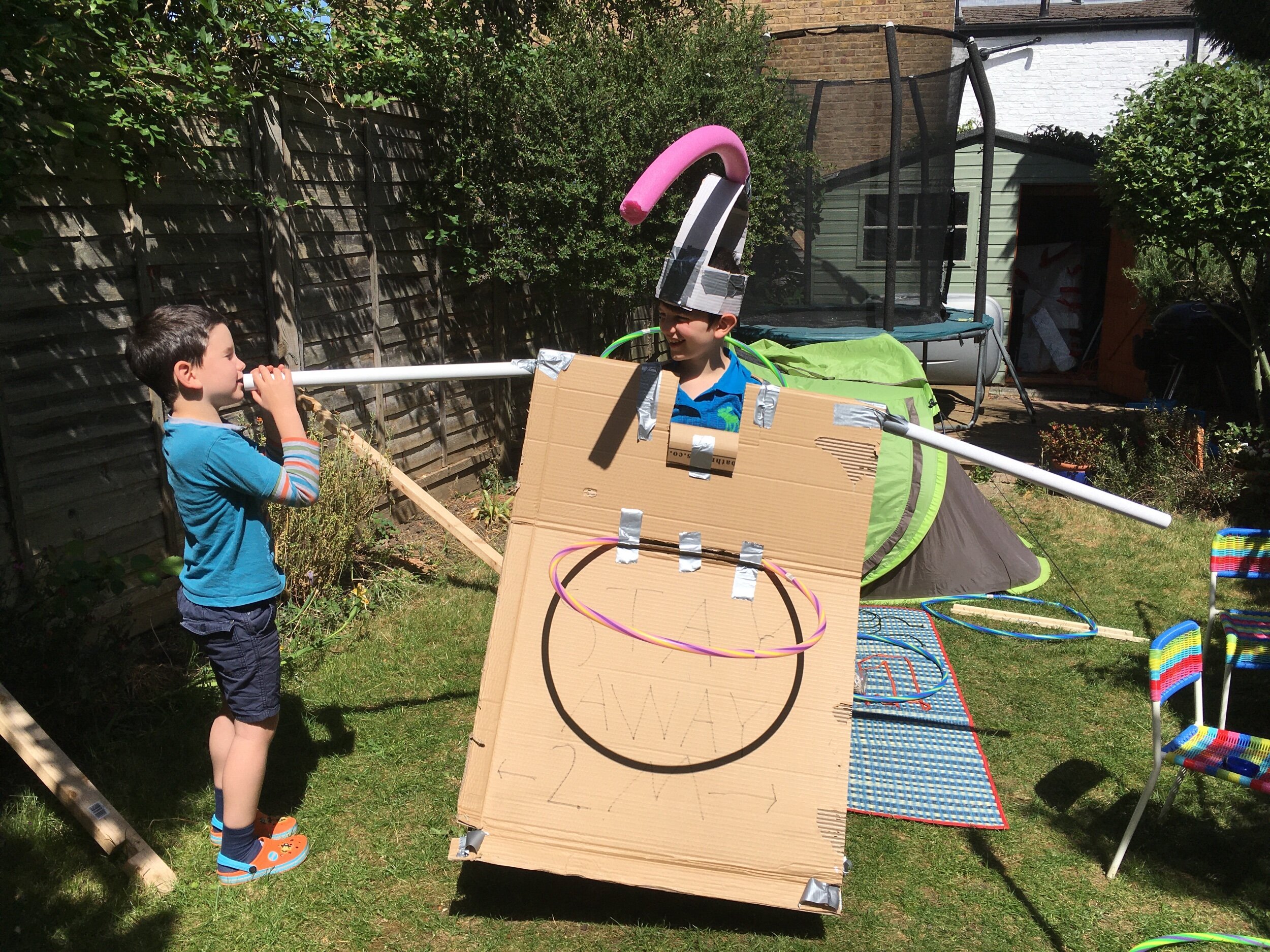
  • Social distance structures (see photo below) - one of the fun family activities on the Zabludowicz Collection website;

  • Firstsite artist activity packs - a series of packs you can download from the Firstsite website featuring activities devised by famous artists;

  • Animation model making - how to make rabbits with an Aardman animator as part of Camp Bestival stay at home Easter sleepover website;

  • Big family press - we love the sessions at the South London Gallery (SLG) and have continued to make booklets referring to their online resources here.


    In addition we have done lots of arts & craft activities at home - sometimes led by myself and sometimes child-led - such as making clay Pokemon with a colourful clay set we were sent as a present, mask making, learning to French knit, stop motion lego animation, and lots more! Along with music and getting fresh air, arts & crafts has been key to helping us all with our wellbeing whilst staying at home.

Social distance structures

Social distance structures

Lockdown - exploring our surroundings

As well as embracing the virtual world, we have also been making sure that we engage with the real world with lots of walks and cycling, as well as spending time in our garden in the lovely sunshine. We value the outdoor space we have at home including a grassy area, a trampoline and a paddling pool.

Beyond our house we have been revisiting favourite places, including Norwood Park with it’s country walk, and Crystal Palace Park with it’s dinosaurs and sphinxes. We have noticed the new in the familiar - a hidden pathway along the side of a local park, and a sign telling us that a family was killed by a bomb during World War II not far from the nearby parade of shops. We have been looking out for rainbows in windows (as well as making our own) and stopping to chat with friends on their doorsteps (at a distance of course).

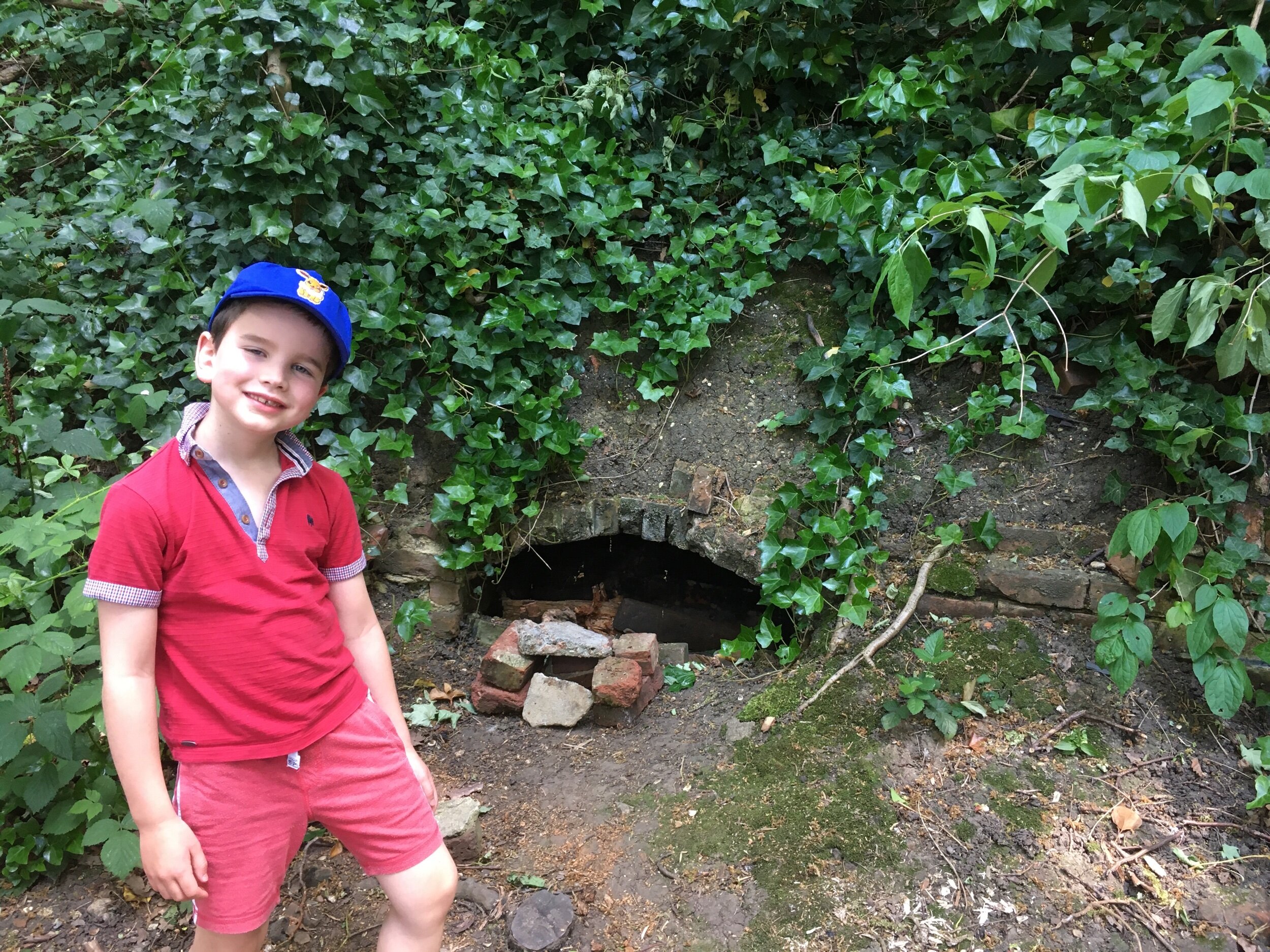
We have also discovered a new little wood within walking distance that is always quiet and has become a bit of a haven for us all. You can look out for the nine wooden markers that create a trail, or visit the giant bug hotel, or try to identify the wide variety of trees. Interestingly there is an area within the wood where you can see the remains of the basement of a row of terraced houses. This beautiful place is called Dulwich Upper Wood, not far from Crystal Palace. We will continue to go here beyond lockdown and I am even tempted to find out about their volunteering opportunities.

Remains of a terraced house basement within Dulwich Upper Wood

Remains of a terraced house basement within Dulwich Upper Wood

Lockdown - digital Resources

Like many families we have been embracing the virtual world during lockdown with the kids intuitively knowing what to do, more so than the adults! As well as virtual museum tours and online school work these are some of our favourite resources:

  • Theatre - we have been loving Little Angel Theatre’s miniature puppet performances of the Jon Klassen trilogy, starting with I Want My Hat Back and they have also posted up videos explaining how to make your own puppets;

  • Coding - my kids have been working remotely with Grandad on ScratchJr and Logo learning the basics of coding, a good skill for the future;

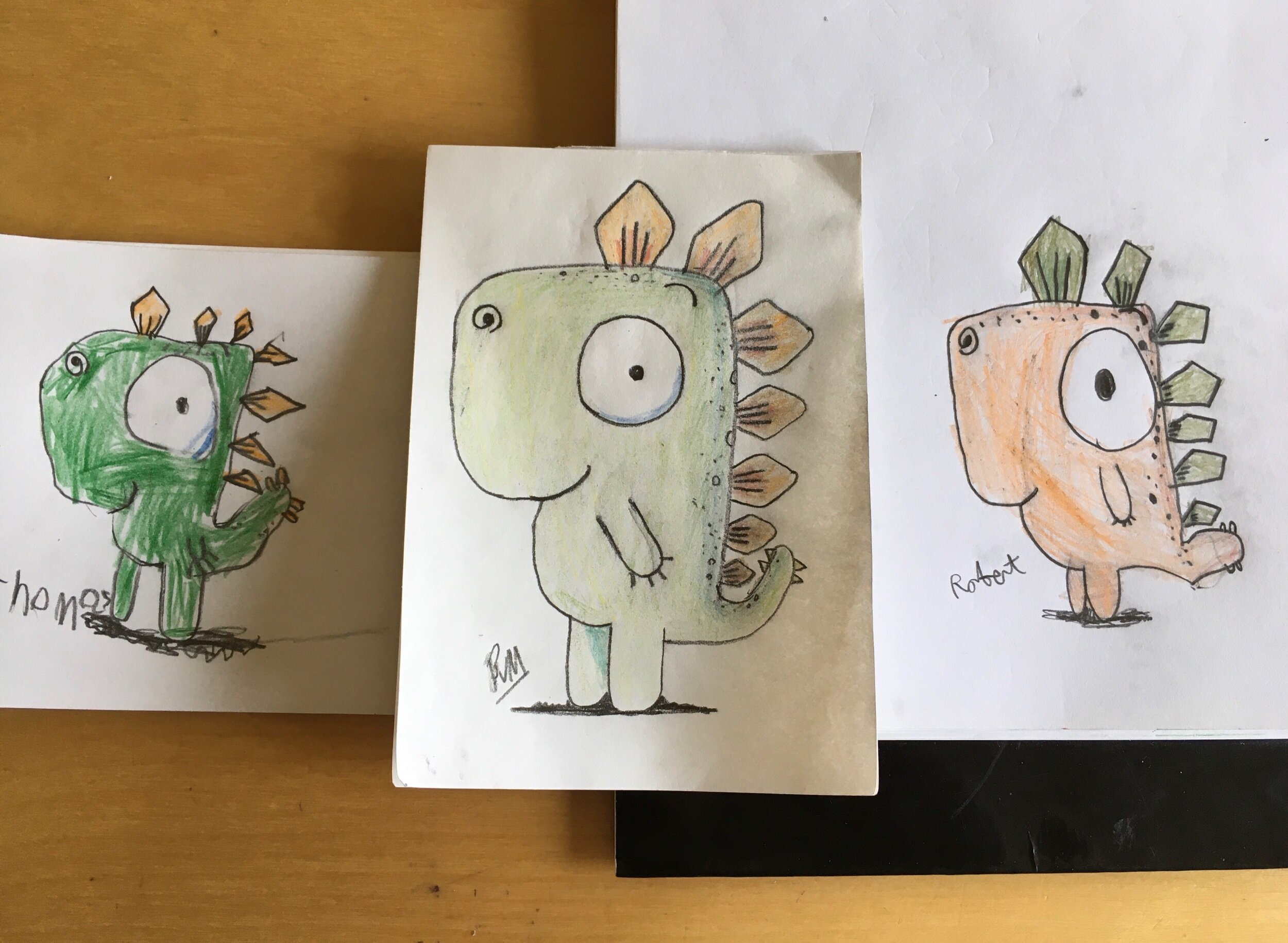
  • Drawing - we love #DrawWithRob where children’s author and illustrator Rob Biddulph does a video masterclass explaining in simple steps how to draw one of his book characters such as Gregosaurus & Sausage Dog;

  • Stories - lots of authors are reading their stories online, with our favourites being Oliver Jeffers Stay at Home Story Time and David Walliams Elevenses. In addition, chapters from the first Harry Potter book Harry Potter & the Philosopher’s Stone by J.K. Rowling are being read by lots of famous people starting with Daniel Radcliffe who played Harry Potter in all of the films;

  • Yoga - my kids were less keen on Joe Wicks’ daily workouts but they love Cosmic Kids Yoga which I have found useful myself for stretching in the mornings. Each yoga session is themed including lots of different animals, Pokemon, Harry Potter and Star Wars;

  • History - we love Horrible Histories so have been enjoying the weekly Homeschool History audios with Greg Jenner on Radio 4;

  • Bubbles - finally we have discovered Samsam Bubbleman who has been posting weekly bubble workshops starting over Easter weekend as part of the Camp Bestival Stay at Home Easter Sleepover. My two kids have become enthusiastic bubbleologists learning to blow massive bubbles, bounce bubbles and blow bubbles through their hands. The secret is in the bubble mixture!

In addition, we have taken part in lots of art activities posted up by art galleries, which I will write about later.

Gregosaurus by Thomas (aged 6), me (aged 46) and Robert (aged 8) #DrawWithRob

Gregosaurus by Thomas (aged 6), me (aged 46) and Robert (aged 8) #DrawWithRob

Lockdown - Virtual Museum Tours

I am a big fan of seeing the real - art, objects and architecture - at museums and galleries. During the COVID-19 lockdown we initially missed our family visits but we have since been exploring the wide range of online museum tours. We are lucky of course that we have digital access and admittedly not all families do. Here are some of our favourite virtual tours (many via Google Arts & Culture):

  • This Guardian article is a good place to start highlighting 10 of the World’s best virtual museum tours including links to the Guggenheim, Bilbao and the Musée D’Orsay, Paris;

  • The Hermitage Museum - apparently you can take up to five hours to explore this site and as sadly I fear I may never get to visit this it’s great to explore both the building and its contents;

  • The Louvré - this tour works well as you can click on the captions for more information about each work, it did test my French though. You can also try it in VR mode;

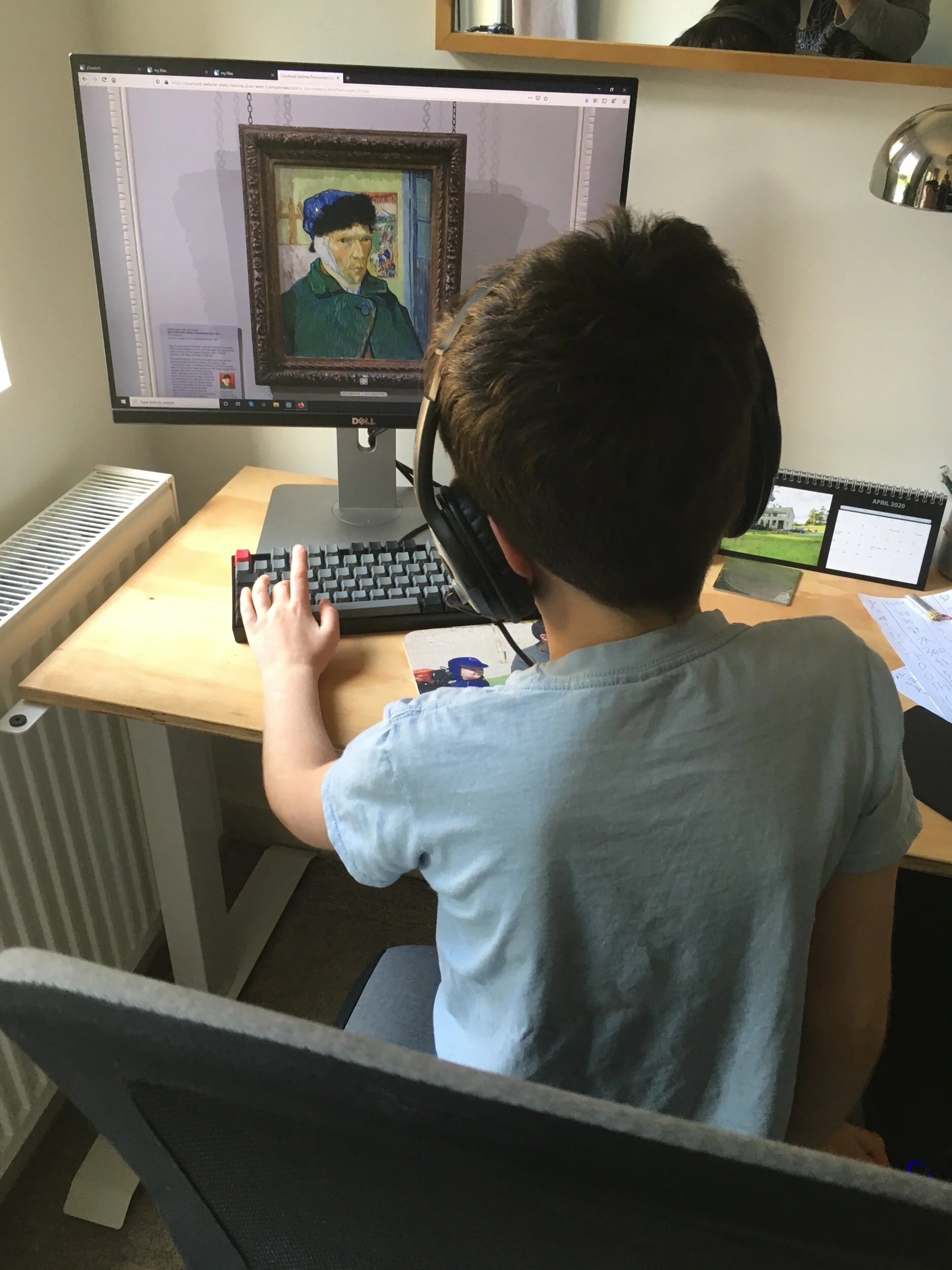
  • The Courtauld Gallery - my boys chose some favourite paintings by Cézanne & Van Gogh and also enjoyed using the menu to ‘teleport’ between rooms, as they put it;

  • Kettle’s Yard - this has been the highlight so far for me. I cannot work out why I have never been in person to this beautiful light-filled house full of art. I will definitely be visiting post-lockdown.

I know many people have said they are suffering from digital overload and I agree in many areas but not with these virtual tours which have helped all of us to get our museum and gallery fix the last month or so!

Looking at Van Gogh’s Self-portrait with Bandaged Ear as part of the Courtauld Gallery’s virtual tour

Looking at Van Gogh’s Self-portrait with Bandaged Ear as part of the Courtauld Gallery’s virtual tour

Museum Hour - guest host again

Museum Hour takes place on Twitter on Monday nights 8 - 9pm. It is regularly hosted by a team of four people working in various museums but they also invite guest hosts to propose subjects to discuss. On Monday 20 April I was the guest host, focusing on evaluation. You can follow the promo tweets and then the conversation via the eight questions I posed by clicking on the various date links below. Thanks to #MuseumHour twitter.com/museumhour for having me!

Promos:

MuseumHour (@museumhour) 18/04/2020, 20:00 Join us on Monday 20 April at 8pm (UK time) for #MuseumHour with freelancer ⁦‪@particip8tion‬⁩ focusing on the topic evaluation after recently overhearing someone say: 'Evaluation? Why are we doing this? Who is it for anyway?' Hit 'like' if you'll be joining in on Monday! pic.twitter.com/ot9tHI1UYL

MuseumHour (@museumhour) 19/04/2020, 20:00 To get ready for tomorrow night's #MuseumHour discussion focusing on evaluation with me ⁦‪@particip8tion‬⁩ take a look at this Evaluation Guide for Community Arts Practitioners
by #CreativeVictoria bit.ly/2VoTDJa pic.twitter.com/yyLwiH7knq

MuseumHour (@museumhour) 20/04/2020, 08:00 To get ready for tonight's #MuseumHour discussion focusing on evaluation with me ⁦‪@particip8tion‬⁩ take a look at The Cultural Learning Evidence Champion's Handbook by ⁦‪@theRSAorg‬⁩ bit.ly/3bdGitV pic.twitter.com/3d4cReMaZQ

MuseumHour (@museumhour) 20/04/2020, 19:00 This is your 1 hour countdown to #MuseumHour tonight with me ⁦‪@particip8tion‬⁩ focusing on evaluation pic.twitter.com/a37Xyl8oPm

MuseumHour (@museumhour) 20/04/2020, 19:56 This is your 5 minute countdown to #MuseumHour tonight with me ⁦‪@particip8tion‬⁩ focusing on evaluation. Grab a cuppa, get yourself comfy and be ready to chat... pic.twitter.com/KMHxGjRtaw

Questions:

MuseumHour (@museumhour) 20/04/2020, 20:00 Q1. Welcome to #MuseumHour focusing on evaluation hosted by me, freelancer ⁦‪@particip8tion‬⁩ Today is in response to me overhearing someone say: ‘Evaluation? Why are we doing this? Who is it for anyway?’ To get us started how would you define ‘evaluation’? #MuseumHour

MuseumHour (@museumhour) 20/04/2020, 20:05 Q2. What kinds of evaluation methodologies have you been involved in within museums & galleries thinking about both the quantitative & the qualitative? Either as an evaluator or as a participant #MuseumHour

MuseumHour (@museumhour) 20/04/2020, 20:15 Q3. Who is your evaluation for? Which stakeholders? Why are you actually doing it? #MuseumHour

MuseumHour (@museumhour) 20/04/2020, 20:20 Q4. What is the most important thing you have learnt from evaluation? Has it ever given you that ‘eureka’ moment? #MuseumHour

MuseumHour (@museumhour) 20/04/2020, 20:30 Q5. Who carries out the evaluation in your organisation? Is it in-house or do you bring in external evaluators? What do you think are the pros & cons of each? #MuseumHour

MuseumHour (@museumhour) 20/04/2020, 20:35 Q6. What usually happens to your evaluation reports? How are they actioned & by whom? (Hands up who has forgotten about an evaluation & left it on a shelf to gather dust ) #MuseumHour

MuseumHour (@museumhour) 20/04/2020, 20:45 Q7. How do you see the future of evaluation? Is there something you’d like to see more of or less of? Have you seen any innovative evaluation approaches you’d like to share? #MuseumHour

MuseumHour (@museumhour) 20/04/2020, 20:50 Q8. During the COVID-19 outbreak with museums being closed & staff remote working, have you individually or as part of your organisation been evaluating/reflecting on your current practices? If so in what ways? Are you approaching this in a different way to usual? #MuseumHour

MuseumHour (@museumhour) 20/04/2020, 21:05 Thanks to everyone who joined in tonight & to ⁦‪@museumhour‬⁩ for having me as a guest host. Apologies for any missed tweets - they came thick & fast! Please feel free to continue the conversation with me  ⁦‪@particip8tion‬⁩  #MuseumHour  pic.twitter.com/Yc5zVFLhT1

Screenshot+2020-04-21+at+11.47.29.jpg

Mentoring for UAL

I’ve recently started mentoring a student for the University of the Arts London (UAL). Our first meeting was over the phone as I had a cold and with the COVID-19 outbreak I will continue to mentor virtually. It feels like a good time to be mentoring a young person. I suggest everyone signs up to be a virtual mentor during this difficult time.

For more information about the UAL mentoring programme take a look here

Sankofa Schools poster project

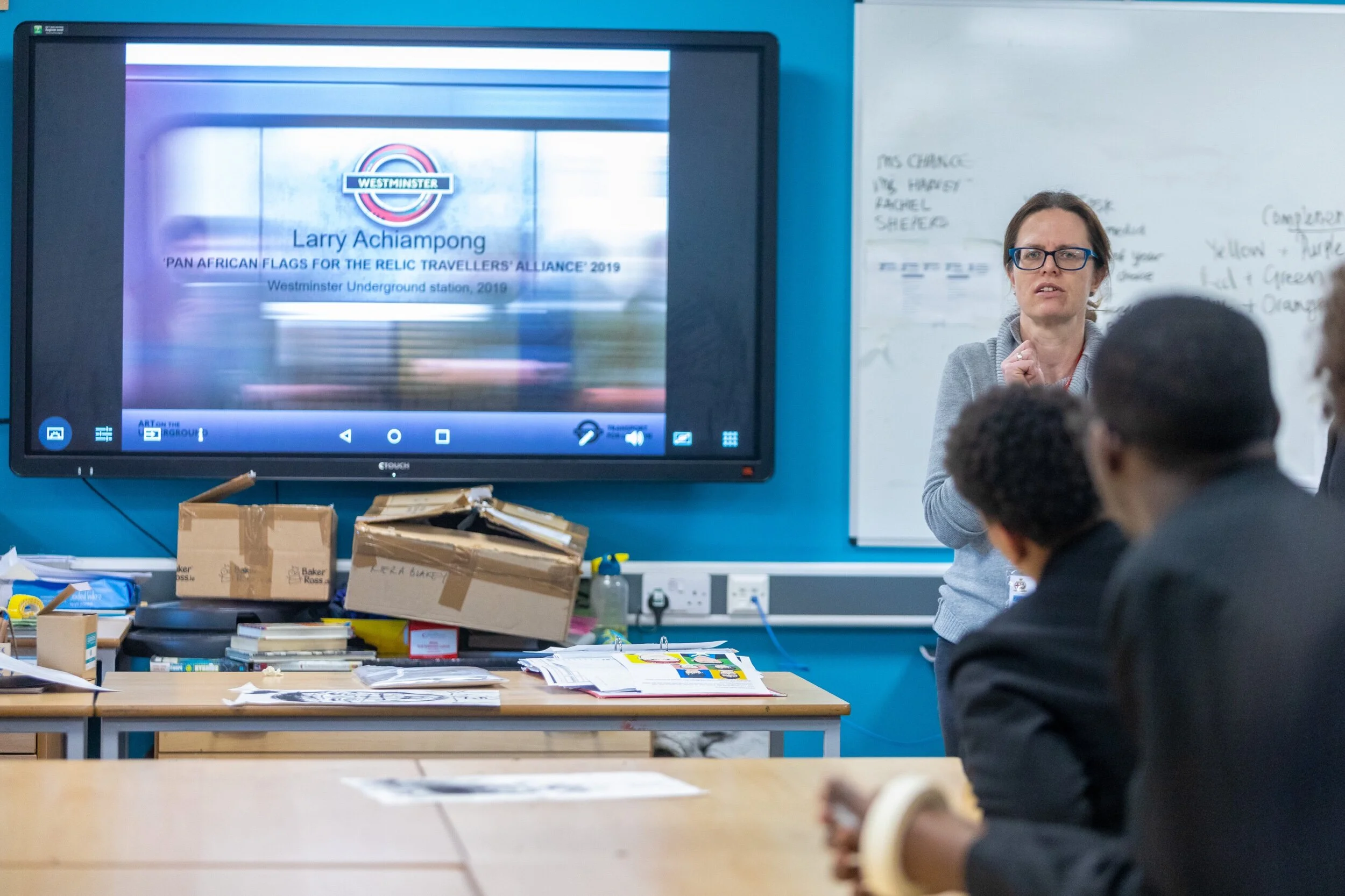
Last week, I spent a day in Westminster City School with artist Shepherd Manyika co-facilitating a workshop for Art on the Underground inspired by Larry Achiampong’s commission at Westminster tube station. We worked with 22 x Year 10 students from across London and from a wide range of cultural backgrounds.

Shep began with a quick fire drawing activity rotating around a large table to get students warmed up, to get to know them, and to free them up from owning their work. Then we introduced Art on the Underground, Larry Achiampong’s commission and Shep as a practicing artist. Using sketchbooks, Shep took them through a mapping exercise using words thinking about their journey to school that morning from waking, and then overlaying with a drawing.

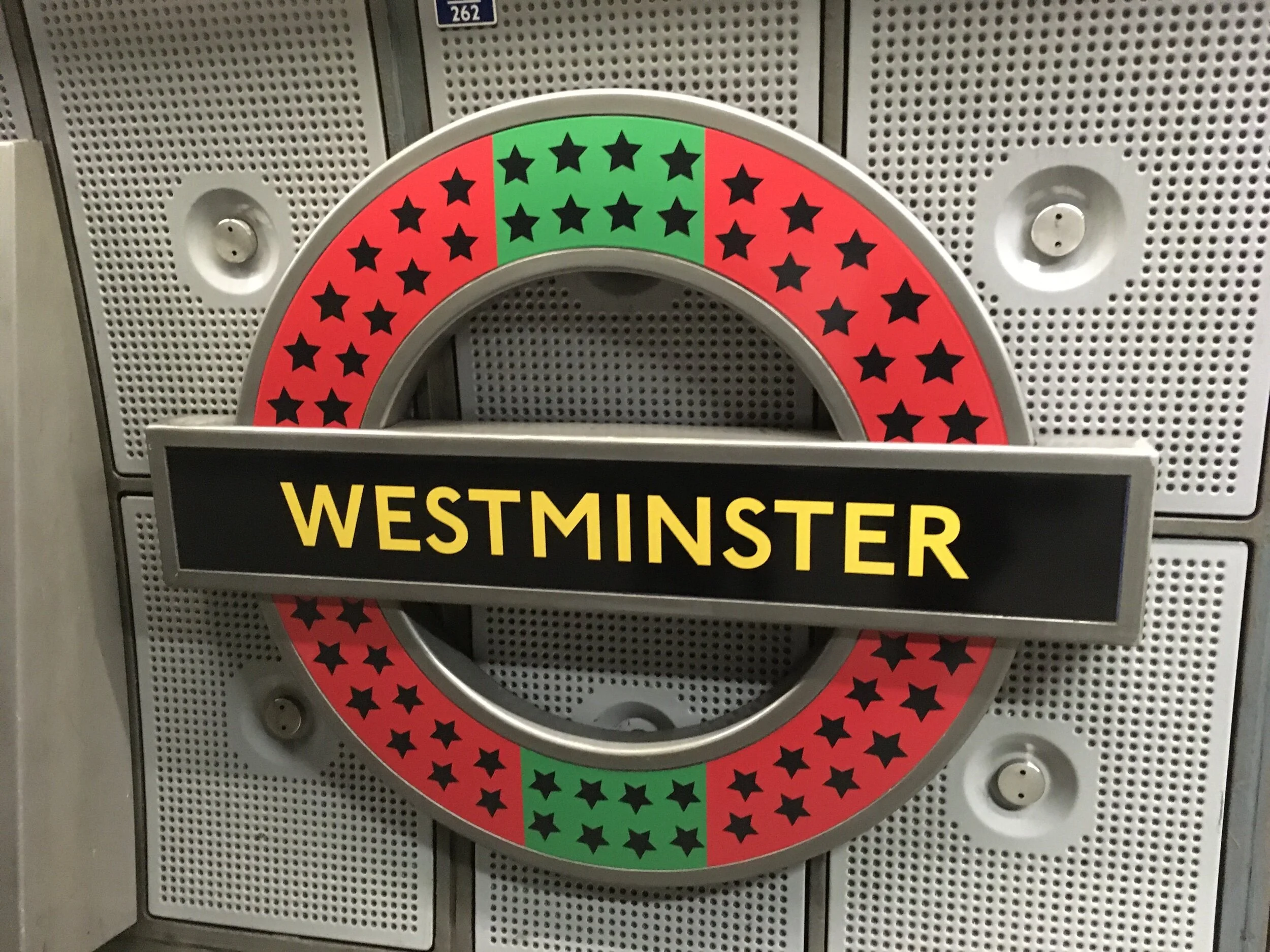
We all walked to Westminster tube station - thinking about our journey along the way - to see Larry Achiampong’s commission which is a reinterpretation of the iconic London Underground Roundel in pan-African colours with 7 designs throughout the station. We spent time looking for the different designs, choosing a favourite to draw, and thinking about how each one makes us feel. The students used words like camouflage, jungle, tiger and unity. We also discussed how public art in a tube station differs to seeing art in a gallery.

Afterwards, we did some sketching in Parliament Square focusing on shapes and colours in iconic London or British designs such as buildings, street signs, buses, uniforms and telephone boxes.

After lunch, we shared our sketchbooks from the morning and each student started to map out a poster design in response to a brief with two parts:

  • the redesign of an iconic London or British design in a way that changes its meaning and makes you feel more represented both culturally and personally;

  • the idea of ‘sankofa’ - using the past to prepare for the future.

We shared some of the students initial designs and talked through the next steps before ending the day. The students will continue working on their designs for the next few weeks both at home and at school, before submitting them with one being selected as a winner to be designed up as a poster to be displayed in Westminster tube station for a month.

For more information about Larry Achiampong’s commission does Art on the Underground see here

Talking about Larry Achiampong’s commission. Photo: Benedict Johnson

Talking about Larry Achiampong’s commission. Photo: Benedict Johnson

Reflecting on 2019

As we head towards the end of 2019, here are my work highlights from a busy past year:

  • Arts Evaluation - I started doing more evaluation of education projects during 2019 with new clients the Whitechapel Gallery (focusing on their Voices that Matter Women’s project) and Little Angel Theatre (interviewing staff at ten theatre venues across the country along with teachers at their local primary schools for their Take Flight touring programme). I also began the third year of evaluating the DEVELOP Young People’s Programme at The Photographers’ Gallery, writing the annual evaluation report of the Public Engagement Programme for Art on the Underground, and working with new client the Empathy Museum to collate their existing evaluation into a report presenting future recommendations;

  • Arts Education - I continued to deliver arts education activity for Art on the Underground with a family event, a poster project for LSBU and tours of Linder’s commission The Bower of Bliss at Southwark tube station for local colleges and community groups. Alongside this, I delivered CPD for arts educators at the Courtauld Gallery, and primary teachers at Little Angel Theatre. I also wrote two teachers’ resources for the Royal Academy focusing on ‘Stories’ for Key stages 1-2 and ‘Sculpture’ for Key stages 3-5 based on artworks in their permanent Collection, in line with their building redevelopment;

  • Progression Routes for Young People - I continued my formal mentoring in 2019, this time with an amazing Young Freelancer from the London Transport Museum, alongside continuing catch ups with my previous mentees. I shared my experiences of setting up paid traineeships at a Youth Programming Symposium hosted by The Photographers’ Gallery, as well as at a session on the Alternative Models for Arts Education module for the Art & Design in Education MA at the Institute of Education. In addition, I joined the Engagement Advisory Board at the Horniman Museum as their youth specialist, and I ran a training day for the Museums Partnership Reading to support them in actioning their Youth Engagement Strategy and working towards developing a Youth Manifesto. This was also the year I did a call out at the engage conference for arts organisations to come together to share and support each other on employment progression routes for young people into the arts sector but instead found out about and joined the Routes In Network hosted by Tate which led to becoming employed by them to co-lead some network sessions, and I’m currently beginning to carry out some research to help them decide on their next steps.

I’m looking ahead to 2020 working with both existing and new clients, so watch this space…

Teacher Twilight session

Last Thursday I ran a teacher twilight session for Little Angel Theatre as part of the Take Flight project evaluation I have been doing for them this year. We had a good mix of teachers from local schools and across London, covering those working with primary and SEND pupils.

The event started with an icebreaker of throw the question (on anything the teachers currently find challenging around participating in arts activity at their school), followed by a tour of the amazing puppet theatre, including behind the stage and the puppet making studio.

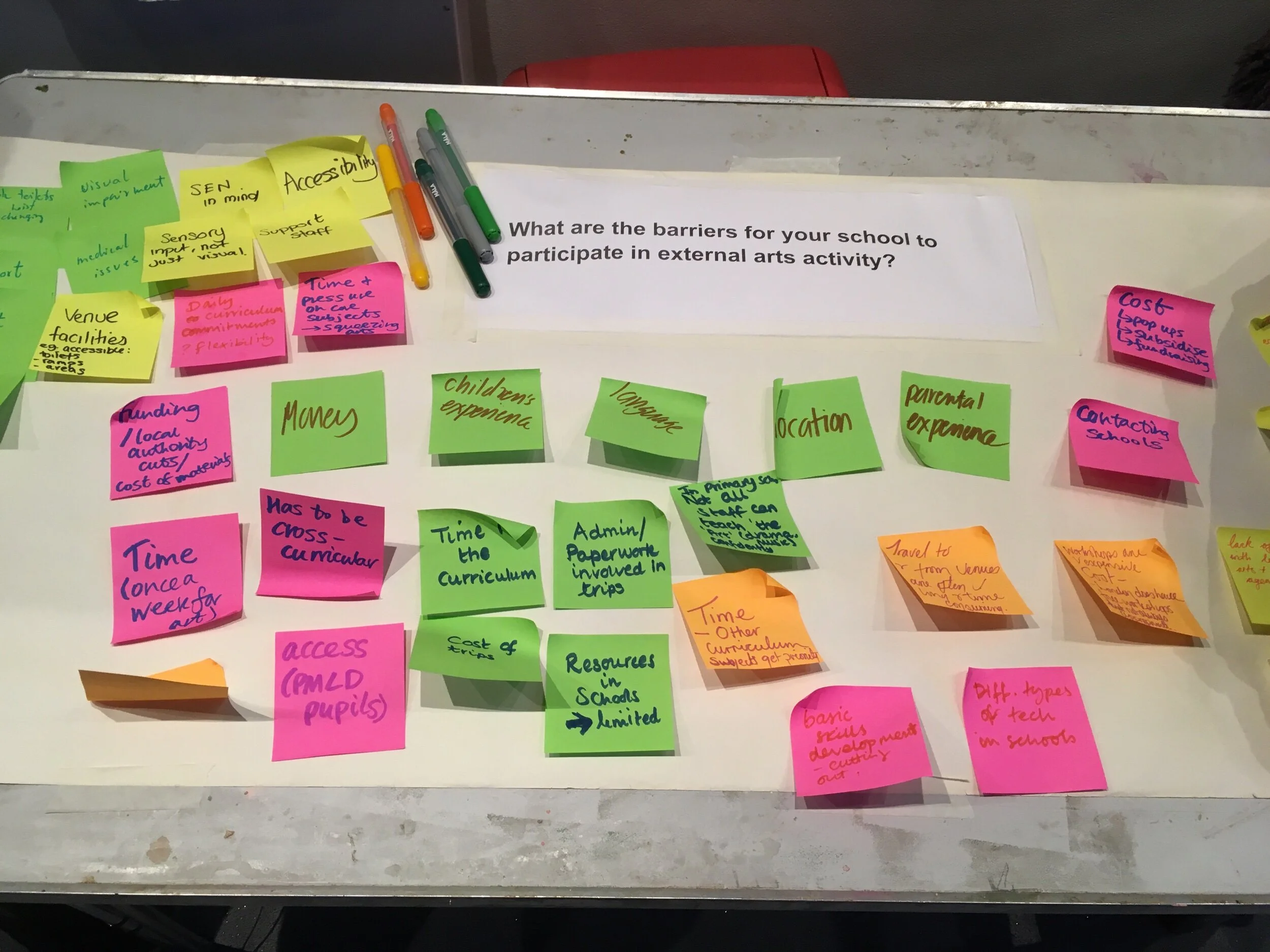
We then focused on a brainstorm and discussion around barriers to engaging in external arts activity, what they would like to see on offer from their local theatre venue in the future, and how the venues could help to break down these barriers.

In addition a SurveyMonkey questionnaire is open until the end of 11 December 2019, with the chance to win a £50 M&S voucher in a prize draw for all who complete the survey here

Findings from these will feed into the Take Flight final evaluation report in addition to interviews with the ten touring venues across the country - in areas of low arts engagement - and their local primary schools, as well as interviews with staff at Little Angel Theatre.

For more information about the Take Flight project, funded by Arts Council England, visit here

Brainstorm around barriers to arts engagement

Brainstorm around barriers to arts engagement

Westminster City School Project for Art on the Underground

I’m excited by the launch this week of Larry Achiampong’s commission for Art on the Underground at Westminster tube station. This is part of his series PAN AFRICAN FLAGS FOR THE RELIC TRAVELLERS’ ALLIANCE, here reimagining the iconic London Underground roundel in pan African colours. There are eight designs to spot across 70 sites in the station.

I visited the tube station with the Head of Art at Westminster City School, located nearby, to see the commission together as part of the planning process for a schools workshop and poster competition with a class of their Year 10 students. This will take place in early 2020.

For more information about Larry Achiampong’s commission take a look here

One of the roundel designs by Larry Achiampong at Westminster tube station

One of the roundel designs by Larry Achiampong at Westminster tube station

Tate Year 3 Project

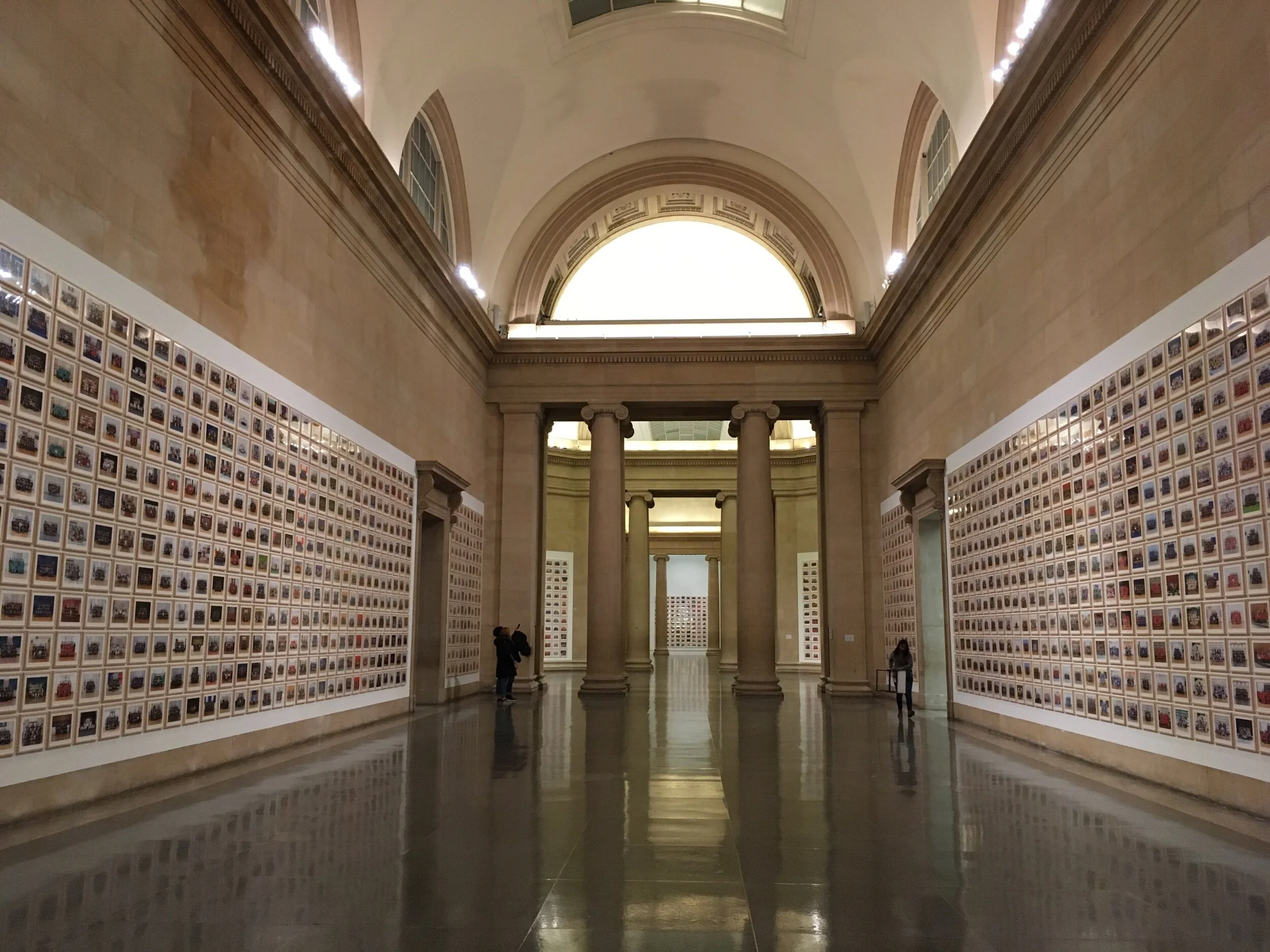
I am so excited that my son is in one of the Year 3 class portraits as part of Steve McQueen’s commission, recently installed in the Duveen Galleries at Tate Britain. Unfortunately his class portrait is located right near the top row of photographs, so although I know which is his class - I can recognise his teacher, teaching assistant, the school uniform and the hall windows - I cannot work out which of the children is him! However I have been told that a giant magnifying machine is apparently on its way to enable better viewing of the higher up portraits so we will return soon as a family.

For more information visit here

The Year 3 Project installed at Tate Britain

The Year 3 Project installed at Tate Britain

New Clients - Empathy Museum & Museums Partnership Reading

I’m excited to be working with two new organisations. Firstly Museums Partnership Reading where I’ll be feeding into their Young People’s strategy across The Museum of English Rural Life and the Reading Museum by running a training day for staff around how best to develop a Youth Manifesto.

Secondly I’m working with the Empathy Museum which has been set up as a series of pop ups across the UK and the world, as participatory art projects dedicated to helping us look at the world through other people's eyes. For them I am consolidating their existing evaluation and feeding into their future plans for 2020.

Museum Hour Guest Host

Museum Hour takes place on Twitter on Monday nights 8 - 9pm. It is regularly hosted by a team of four people working in various museums but they also invite guest hosts to propose subjects to discuss. On Monday 16 September I was the guest host, focusing on Community Participation. You can follow the promo tweets and then the conversation via the eleven questions I posed by clicking on the various date links below. Thanks to #MuseumHour twitter.com/museumhour for having me!

Promos:

MuseumHour (@museumhour)14/09/2019, 19:00 Join us on Monday 16 September at 8pm (UK time) for #MuseumHour with ⁦‪@particip8tion‬⁩ focusing on Community Participation. Who do you engage with in your community? Who is missing? How do you sustain relationships & what is the legacy? Hit 'like' if you'll be joining in on Monday! pic.twitter.com/py1PG1UA9Y

MuseumHour (@museumhour)15/09/2019, 19:00 To get ready for tomorrow night's #MuseumHour discussion around Community Participation with me ⁦‪@particip8tion‬⁩ take a look at this interview with #MikeMurawski Director of Learning & Community Partnerships ⁦‪@PDXArtMuseum‬⁩ ow.ly/6gFU50w6J2P pic.twitter.com/YxUY4X7dYa

MuseumHour (@museumhour)16/09/2019, 08:00 Check out this link ready for #MuseumHour at 8pm tonight (UK time) with me ⁦‪@particip8tion‬⁩ focusing on Community Participation. An example of positive community practice is ⁦‪@SLG_artupdates‬⁩ working with local residents on three housing estates bit.ly/2lQNd7w pic.twitter.com/Y0MmLNdRS9

MuseumHour (@museumhour)16/09/2019, 12:01 Check out this link ready for #MuseumHour at 8pm tonight (UK time) with me ⁦‪@particip8tion‬⁩ focusing on Community Participation. An example of positive community practice is ⁦‪@mimauseful‬⁩ working with refugees and running a weekly community day bit.ly/31KZtas pic.twitter.com/hKYBe4DWWL

MuseumHour (@museumhour)16/09/2019, 16:01 Check out this link ready for #MuseumHour at 8pm tonight (UK time) with me ⁦‪@particip8tion‬⁩ focusing on Community Participation. An example of positive community practice is ⁦‪@empathymuseum‬⁩ art projects helping us look at the world through other people's eyes ow.ly/LNal50w6KE5 pic.twitter.com/M6nZlvLuKQ

MuseumHour (@museumhour)16/09/2019, 19:50 This is your 10 minute countdown to #MuseumHour tonight with me ⁦‪@particip8tion‬⁩ focusing on Community Participation. Grab a cuppa, get yourself comfy and be ready to chat... pic.twitter.com/w80bx85C5J

Questions:

MuseumHour (@museumhour)16/09/2019, 20:01 Q1. Welcome to #MuseumHour focusing on Community Participation guest hosted by me, freelance arts educator & evaluator ⁦‪@particip8tion‬⁩ To get us started who do you engage with in your local community? And how would you define ‘community’?

MuseumHour (@museumhour)16/09/2019, 20:05 Q2. Does your ‘community’ exist outside the walls of your institution, or is your institution part of that community offering a community-centred approach? #MuseumHour

MuseumHour (@museumhour)16/09/2019, 20:10 Q3. Who is responsible for community engagement on your staff? Is it only those within your learning team or is it everyone's priority? #MuseumHour

MuseumHour (@museumhour)16/09/2019, 20:15 Q4. How do you prioritise who you work with within your community? Is this dictated by funding? #MuseumHour

MuseumHour (@museumhour)16/09/2019, 20:20 Q5. What factors are key to consider when engaging with new communities? #MuseumHour

MuseumHour (@museumhour)16/09/2019, 20:25 Q6. How do you avoid tokenistic community work and make sure that the audience’s voice is included and respected? How do you reflect on and evaluate this? #MuseumHour

MuseumHour (@museumhour)16/09/2019, 20:30 Q7. "Who is not in the room and why?” This applies to local community participants but also workforce. How could you diversify your staff to reflect your local communities and help to make your organisation more inclusive? #MuseumHour

MuseumHour (@museumhour)16/09/2019, 20:35 Q8. What has worked well for you, or give examples from other organisations, around working with your local community? #MuseumHour

MuseumHour (@museumhour)16/09/2019, 20:40 Q9. What has not worked so well for you, or give examples from other organisations (feel free to keep this anonymous), around working with your local community? #MuseumHour

MuseumHour (@museumhour)16/09/2019, 20:45 Q10. How could you sustain your community relationships beyond the end of your funding? What legacy could there be from your community work? #MuseumHour

MuseumHour (@museumhour)16/09/2019, 20:50 Q11. To end tonight's discussion, if funding and other barriers were not present which new communities would you ideally like to engage with and in what way? Think blue sky! #MuseumHour

MuseumHour (@museumhour)16/09/2019, 21:01 Thanks to everyone who joined in tonight & to #MuseumHour for having me as a guest host. Please feel free to continue the conversation with me ⁦‪@particip8tion‬⁩ or to check me out at particip8tion.com pic.twitter.com/7CNQ3uDEvM

IMG_9482.jpg

Summer Fun with the kids In France

This summer I was fortunate to spend four weeks travelling around France again with my family in our campervan. On our travels we came across a number of quirky art, museum and heritage sites:

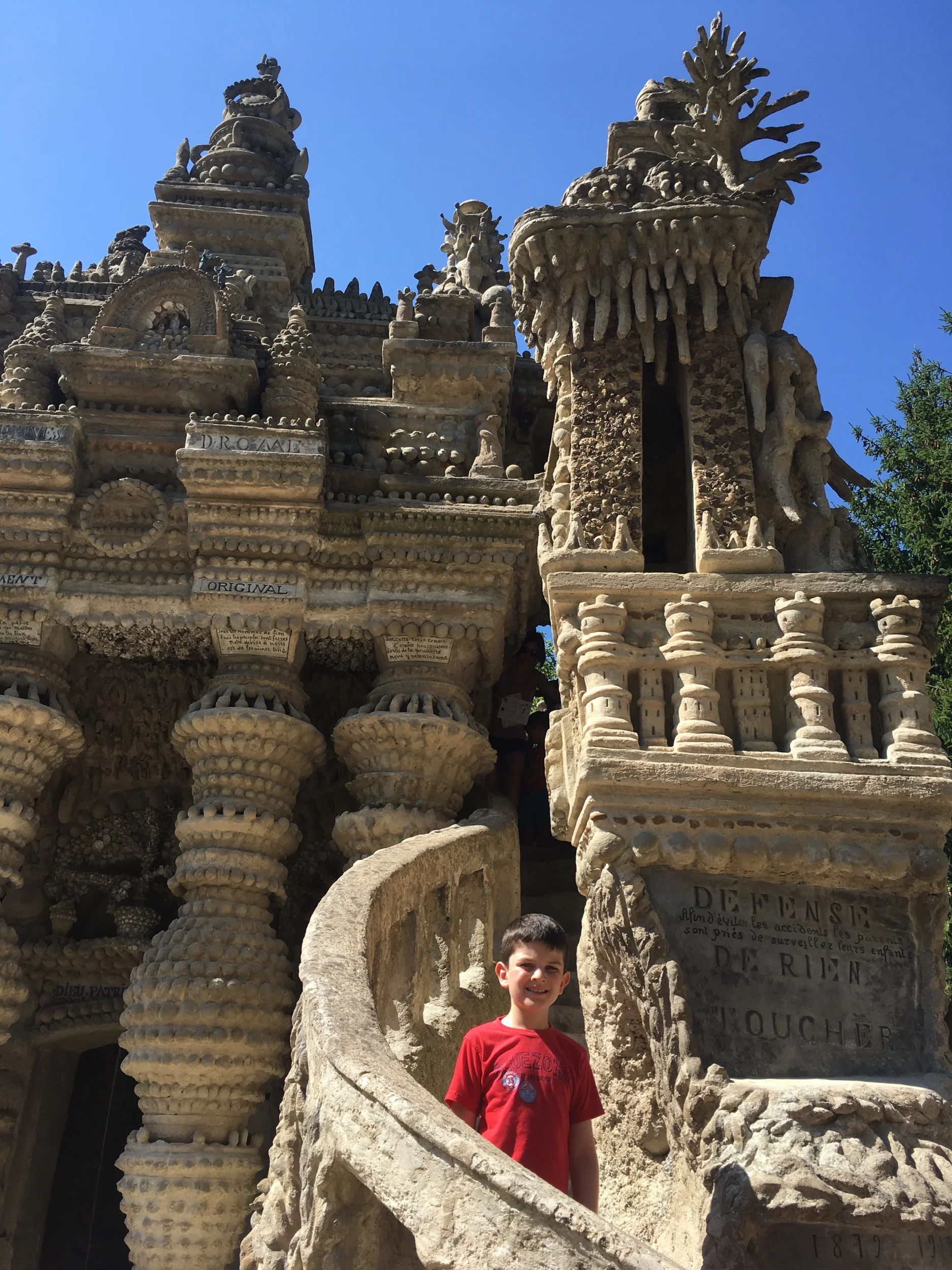
  • Palace Idéal du Facteur Cheval, Hauterives - making a bit of detour on our travels we visited an incredible stone palace called Palais Idéal du Facteur Cheval which was built between 1879 and 1912 by Ferdinand Cheval. He was a postman by day and outsider artist by night. It only took him 33 years to create his masterpiece! Find out more here

  • Musée du Velo, Tournus - featuring bikes through the ages this small museum displayed some wonderful bike posters, a wide variety of bicycles - including tricycles, tandoms and even a three seater bike - along with a section all about the Tour de France. I found it very interesting and I am not a massive bike fan. We were able to have a go on a number of unusual bicycles including one which was like a penny farthing - I was very surprised that I didn’t fall off! Take a look here

  • Grotte de Clamouse - these stunning caves featured stalactites, stalagmites and eccentric concentrations of dolomite/calcite, including one looking like a jelly fish which is used as their logo! However I am not sure we needed the rather cheesy light and sound show in one cave. The tour was in French but we had English audio guides which were very informative. For further details look here

  • Bunker 638, La Tamarissière - welcoming friendly volunteers explained about the restoration of this hospital bunker built by the Nazi occupation in France along with a hundred other bunkers along the South coast of France near Agde. It only opens one morning a week so we were lucky to be able to go inside. However Thomas was scared of the mannequins! Visit Trip Advisor here

  • Ecluse Ronde, Agde - starting with a walk along the canal from the town centre we went to see a special round lock. Nearly 350 years old, it connects up three parts of the canal. We saw a boat using it on its journey, explaining to the kids what locks are used for. Check it out here

  • Celles, Hérault - this village by Lac du Salagou was abandoned in 1967 due to potential flooding when the lake was supposed to be raised another 11 metres, but this never actually happened. A project is currently taking place to renovate the derelict and graffitied buildings so as to repopulate the village. There is only one family living there at the moment with their home, an exhibition and post office all housed within the Mairie (town hall) building. It was interesting chatting to the urban planner working with them. Discover more here

For myself, visiting Palace Idéal du Facteur Cheval was a truly special day as it was so incredible what Cheval had achieved on his own especially all the carved stone details. We were able to visit a number of churches, abbeys and cathedrals on our travels too.

Over the summer, it was lovely to see the children developing in confidence and increasing in independence as they explored the various campsites. We also went swimming everyday and - whenever possible - not just in pools but in lakes, rivers and the sea. It is strange to be back home spending much more time indoors but we are already looking forward to next year’s trip!

Palace Idéal du Facteur Cheval, Hauterives

Palace Idéal du Facteur Cheval, Hauterives

Mentoring

Over the years I have informally mentored a number of young people, usually following on from meeting them via one of the youth programmes I have worked on. Two years ago I took part in the Mentoring for All pilot run by the Museum Association, which has helped me to formalise my future mentoring relationships.

I am currently mentoring an inspiring mentee who is one of the Young Freelancers at London Transport Museum (LTM). I find that I am learning greatly from the conversations we have whilst also supporting her early on in her career; both in navigating the politics of working in the arts sector and in mapping out her future as a freelancer.

To find out more about the programme at London Transport Museum and to consider putting yourself forward as a mentee for next years’ Young Freelancers programme visit here

Next year there will be an additional freelance role at LTM, The Khadija Saye Photography Fellowship.

Family Mural Tour

Last weekend, for Art on the Underground, I gave a tour of some of the 1980s Brixton murals along with Aliza Nisenbaum’s commission at Brixton tube station. The tour was aimed at families with free sketchbooks and drawing materials provided to encourage everyone to draw their favourite parts of each mural and map their journeys, whilst learning about the stories behind the murals and playing games together. 

For more information about the murals you can download the Brixton Mural Map. Copies are also available from Brixton tube station.

FullSizeRender.jpg

The artists with their sketchbooks

FutureProof

As part of my role as evaluator for the DEVELOP Programme for young people at The Photographers’ Gallery I recently attended the private view of FutureProof to chat to visitors. Presented at The Truman Brewery, as part of Free Range, an annual showcase of UK graduates, FutureProof is an alternative exhibition of original works conceived and curated by participants of the DEVELOP Programme.

One visitor said: 

“It’s a snapshot of the art world in an intense moment. It’s great to see everything in a few days in one place.”

And someone else said that it was the first exhibition they had ever been to!

For more information about Future Proof take a look here

IMG_7757.PNG

Future Proof exhibition branding

Routes In

I recently facilitated the latest Routes In Work network meeting at Tate Britain. Routes In is a commitment to offer up more opportunities and create a level playing field for young people from under-represented backgrounds when entering Tate, along with the wider cultural and creative industries. I am acting as a critical friend for the programme helping them to decide on their next steps following on from this year’s Routes In Alternative Careers Fair. For more information take a look here